RPG fitness is training wrapped inside a role-playing game: you take the part of a character in an unfolding story - a hero, a ronin, a survivor of the apocalypse. The story advances one day at a time, with each day's chapter paired to a real workout that you complete to live it. It solves the oldest problem in fitness, which was never knowledge but motivation: instead of discipline dragging you to day 43 of a program, curiosity pulls you there, because you want to know what happens next. The approach has real science underneath - gamified exercise measurably increases physical activity in the pooled trials, stories are one of the most reliable ways to change how people think and act, and playing a capable character genuinely shifts behavior toward that character. DAREBEE builds complete fitness RPGs in this format - eleven of them, text-based, free, no equipment, playable by anyone in a living room. Everything below covers how they work, why they work, which world to enter first and how to play.
What RPG Fitness Is
A DAREBEE fitness RPG is interactive fiction with a training program for a spine. Each program runs for a set number of days, and each day delivers a chapter of story plus the workout that goes with it - the fight you were just ambushed into, the mountain the plot needs climbed, the training your mentor insists on. Some days offer choices that branch the story; some worlds track supplies, wounds or experience; all of them run on the honor system, because the only referee that ever mattered in home fitness is you. There is no equipment, no account, no purchase - a screen to read from and space to train in is the whole setup. You are simultaneously the reader, the player and the character, and the program is complete when the story is. Miss a day and the world simply waits for you.
Why Stories Make Training Stick
The format is not a gimmick bolted onto exercise - it is motivation science assembled into a game, and each piece has evidence behind it.
Games feed the three needs motivation runs on. Decades of motivation research identify three basic psychological needs that determine whether people keep doing hard things voluntarily: autonomy (it was my choice), competence (I am getting better at it), and relatedness (it connects me to something).[1] A fitness RPG serves all three by construction - you choose your world and your path through it, the escalating days make growth tangible, and the character and story give the effort a context bigger than a rep count. This matters directly for training, because the exercise-specific research is blunt: autonomous, self-driven motivation is what predicts whether you are still exercising months later, far better than pressure or obligation does.[2]
Gamification measurably moves bodies. Across the randomized controlled trials pooled in the meta-analysis, gamified interventions increased participants' daily physical activity, with the effect still detectable months after the game elements ended.[3] The structure does not merely feel motivating. It shows up in step counts and it outlasts the novelty.
Stories carry people further than instructions. The psychology of narrative transportation - being absorbed into a story - shows that transported readers change their attitudes and intentions more readily than people given the same content as plain information.[4] An instruction says "do 40 lunges". A story says "the pass is guarded, and you go through anyway". The lunges are the same, and the second version carries you through them.
You train toward the character you are playing. The avatar research has a finding almost designed for fitness: people given a capable, confident character to embody start behaving more like that character, and the effect is reliable enough to have a name, the Proteus effect.[5] Sixty days of being the hero of your own campaign is sixty days of practicing the identity of someone who trains. Identity, once it settles, is what makes training self-sustaining.
Daily chapters build the habit while you are looking at the plot. Habits form through repetition in a stable context - the research puts the average around 66 days of daily repetition before a behavior starts running on automatic[6] - and a story delivered in daily installments is a repetition engine wearing a costume: the cliffhanger does the reminding, the chapter does the scheduling, and by the final page the training habit has been rehearsing for two months without ever being the point.
The Worlds: DAREBEE's RPG Library
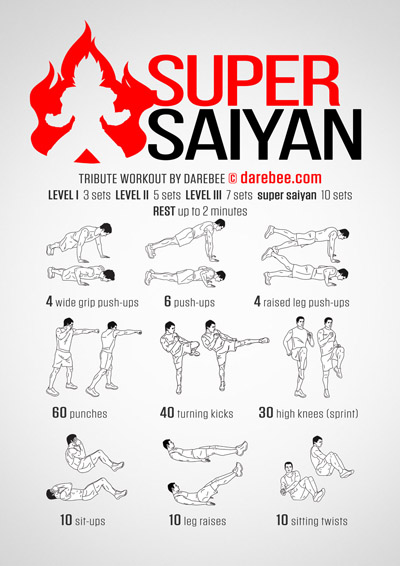
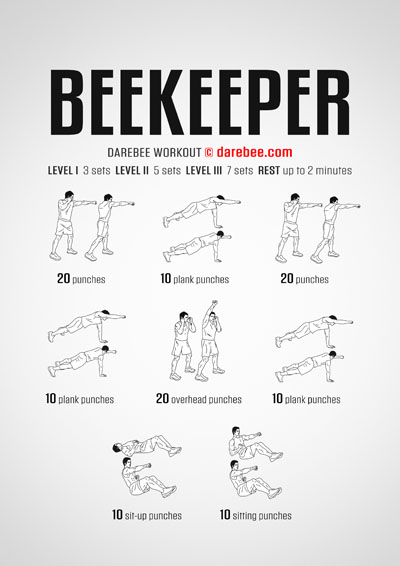
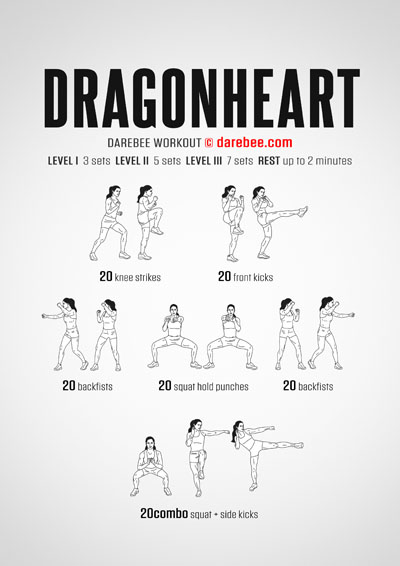
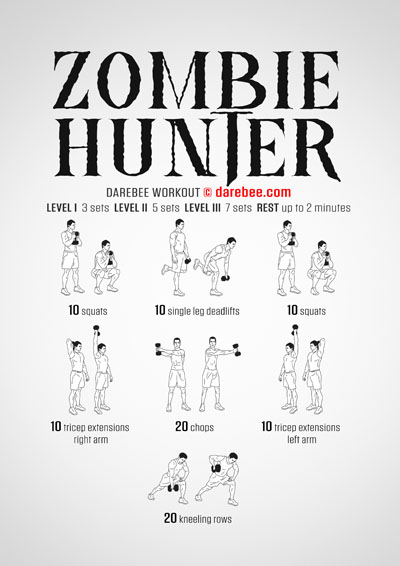
Eleven complete fitness RPGs are live and free, spanning most of fiction's great territories: classic fantasy in Hero's Journey, the original and still the definitive place to start; the post-apocalyptic wastelands of Age of Pandora and Carbon & Dust; Norse myth in House of the Valkyrie; the wandering swordsman's Japan in Ronin's Blade; sorcery and shadow in Spellbound and Shadebound; the myth-soaked maze of The Labyrinth; wilderness survival in Pathfinder and its harder sibling Pathfinder Plus; and a superhero origin story in Zero Hero. Difficulty and length vary by world, so each program page states its level and days up front - and for single-session adventures between campaigns, the RPG Fitness Workouts collection and the Superhero Workouts collection hold standalone quests in the same spirit.
How To Play
- Pick by taste rather than by optimization. The mechanism is wanting to come back tomorrow, so the world that appeals to you is the correct one. If you are torn between two, choose the one whose first chapter you read twice.
- Match the difficulty honestly. Every program states its level; start where you can finish the workouts with effort but without dread, because the story only works if the training underneath it is doable. Exercise levels inside each day adjust the same way all DAREBEE workouts do.
- Read first, then train. The chapter sets the stakes for the workout - read it, picture it, then do the day's training as the scene it belongs to. Skipping the story to bang out the exercises is legal and pointless, like fast-forwarding a film to the credits.
- Play it honest. The reps, the choices and the consequences all run on the honor system, which is the quiet second curriculum of every RPG program: keeping faith with a version of you that nobody is checking on.
- Missed days are pauses rather than failures. The world waits. Pick the story up where you left it, because a run only fails when you decide it has.
- Keep a campaign log. A training journal in The Hive turns your playthrough into a story other people follow and cheer for - many of the community's best-loved threads are exactly this, and relatedness is the third of those three motivational needs for a reason.
- Finish, then travel on. Completing a world is a genuine achievement with a fitness result attached. The next world is waiting, and veterans of one campaign start the next visibly stronger.
Common Mistakes
- Treating it as a children's format. The motivation machinery these programs run on - autonomy, competence, narrative transportation, identity - is adult psychology at full strength. Grown adults finish these programs precisely because the format respects how motivation actually works.
- Reading ahead without training. Binging chapters turns a fitness program into a short story and spends the entire pull of what-happens-next for nothing. One day, one chapter, one workout - the pace is the program.
- Skipping the story to "just train". The plain workouts already exist elsewhere on DAREBEE. Choosing an RPG and ignoring the RPG removes the one ingredient you came for.
- Entering at the wrong difficulty. A world whose workouts flatten you by day 5 ends the story there. Start honest; the harder worlds will still exist when you are ready for them.
- Quitting a campaign over a missed week. Life interrupts fiction too. The bookmark holds; resume the day you stopped rather than from a guilt-ridden day 1.
What To Expect
Expect to be surprised at how fast the story gets its hooks in. The day-one novelty becomes a genuine pull somewhere in the second week, and adults who have not been read to since childhood discover they will do burpees to find out what is behind a door. Expect the fitness results of a real program, because that is what sits under the fiction: strength and conditioning building on the same schedule as any structured 30-60 days of progressive training, with the difference that adherence - the thing that decides whether any program works - is being carried by the plot instead of the calendar. Expect the identity shift the avatar research describes, arriving quietly: several weeks of playing someone who trains, and training stops feeling like a costume. And expect the finish to matter more than finishing programs usually does. A completed world is a story you lived through with your own effort, which is why so many players photograph the final day, post it in The Hive and start scanning the library for their next world the same evening.
Pick A World, Live One Chapter A Day, Let The Story Carry The Training
Do RPG fitness by entering the world that appeals to you at a difficulty you can honestly sustain, taking one chapter and its workout per day - read first, train as the scene, log the campaign in The Hive. Then let the format's machinery do what the evidence says it does: gamification raising activity, story transporting you past resistance, daily chapters assembling the habit, and two months of playing the hero quietly making you the person who trains. The world waits through every missed day, and the library holds ten more when you finish.
Summary
RPG fitness wraps a complete training program inside interactive fiction: daily chapters paired with real workouts, choices and consequences on the honor system, no equipment, free - you advance the story by training, and curiosity replaces discipline as the engine. The science stacks up behind the format: motivation research's three needs (autonomy, competence, relatedness) are served by choice of world, escalating days and character; autonomous motivation is what predicts sustained exercise in the systematic review; gamified interventions increased physical activity across pooled randomized trials with effects outlasting the intervention; narrative transportation changes attitudes and behavior more than plain information; the Proteus effect shows people behaving toward the capable characters they embody; and daily chapters run the roughly 66-day repetition engine that habit formation requires, while you watch the plot. DAREBEE's library holds eleven worlds - from Hero's Journey's classic fantasy through post-apocalyptic, Norse, samurai, sorcerous, mythic, wilderness and superhero settings - plus standalone RPG and superhero workout collections. Play it right: pick by taste, enter at an honest difficulty, read then train, keep faith with the honor system, log the campaign in The Hive, treat missed days as pauses, and finish - then pick the next world, arriving stronger.
Research
- 1. Ryan RM, Deci EL. Self-determination theory and the facilitation of intrinsic motivation, social development, and well-being. Am Psychol. 2000 Jan;55(1):68-78. doi: 10.1037/0003-066X.55.1.68.
- 2. Teixeira PJ, CarraƧa EV, Markland D, Silva MN, Ryan RM. Exercise, physical activity, and self-determination theory: a systematic review. Int J Behav Nutr Phys Act. 2012 Jun 22;9:78. doi: 10.1186/1479-5868-9-78.
- 3. Mazeas A, Duclos M, Pereira B, Chalabaev A. Evaluating the Effectiveness of Gamification on Physical Activity: Systematic Review and Meta-analysis of Randomized Controlled Trials. J Med Internet Res. 2022 Jan 4;24(1):e26779. doi: 10.2196/26779.
- 4. Green MC, Brock TC. The role of transportation in the persuasiveness of public narratives. J Pers Soc Psychol. 2000 Nov;79(5):701-721. doi: 10.1037/0022-3514.79.5.701.
- 5. Yee N, Bailenson J. The Proteus Effect: The Effect of Transformed Self-Representation on Behavior. Hum Commun Res. 2007 Jul;33(3):271-290. doi: 10.1111/j.1468-2958.2007.00299.x.
- 6. Lally P, van Jaarsveld CHM, Potts HWW, Wardle J. How are habits formed: modelling habit formation in the real world. Eur J Soc Psychol. 2010;40(6):998-1009. doi: 10.1002/ejsp.674.