If you are recovering from an injury, have a mild disability that prevents you from doing certain moves, have bad knees or are suffering from back pain and you want to avoid high impact exercises but you still want to stay active and try some of the workouts from this website, try these modifications.
The modifications will also be suitable if you are trying to keep the noise you make to a minimum – it’s handy if you live in an apartment and your neighbours are … not very understanding people.
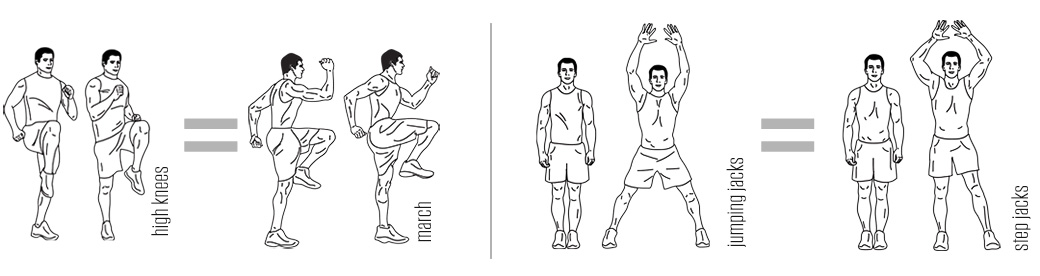
Reduce the pressure you put on your knees by replacing high knees with march steps and jumping jacks with step jacks:
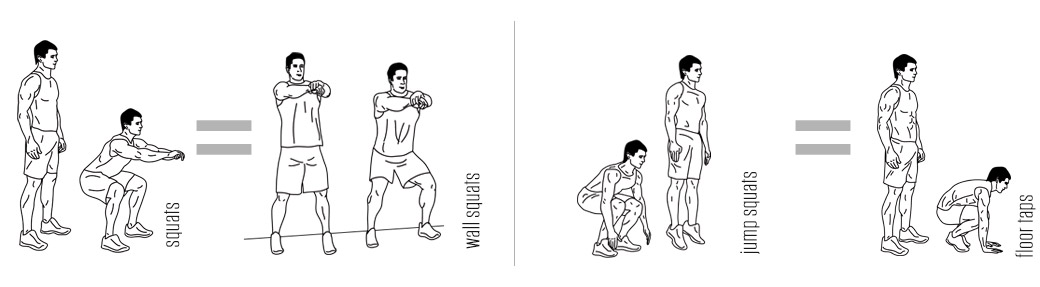
Reduce the pressure put on your knees by replacing squats with wall squats and jump squats with floor taps:
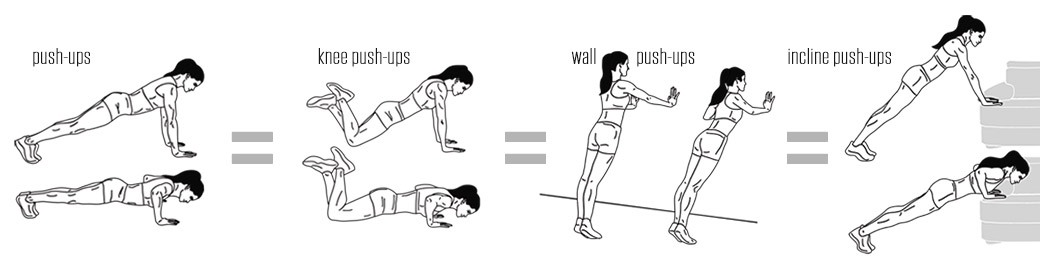
Take the pressure off your shoulders and upper body during push-ups by replacing them with knee push-ups, wall push-ups or incline push-ups:
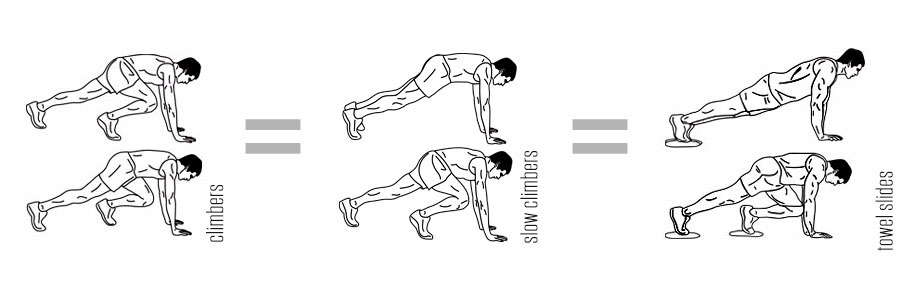
Replace mountain climbers with cross climbers or towel sliding climbers to reduce noise and the pressure you put on your knees:
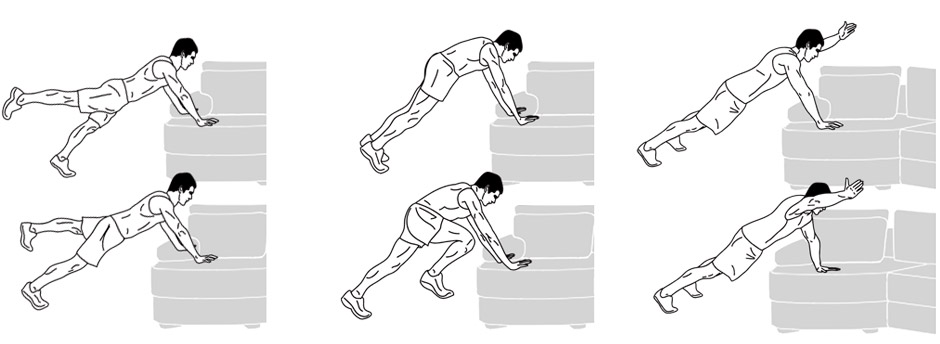
Use a sofa to elevate your static and/or dynamic planks if you find them too hard or if you struggle with a lot of extra weight.
Add Equipment
This resource is designed to make fitness as accessible as possible, make it easy to start and continue with training on a daily basis indefinitely and make it part of your lifestyle – without spending any money and without any special equipment.
All workouts here are almost entirely based on bodyweight exercises and whatever else you can find and make into a piece of equipment (boxes, baskets, chairs etc.). You can add equipment to the routines if you have it on hand, though, to make our routines more challenging.
You can use equipment, but you don’t have to. It’s a personal thing, and once you are used to regular training you’ll be able to tell whether you need to add something extra or not. If you are a beginner, we strongly suggest that you don’t buy anything until you have done at least two months’ worth of training to know you’ll use the extra equipment and it won’t just gather dust in the corner. Don’t waste any money unless you are absolutely sure you need something and you will use it.
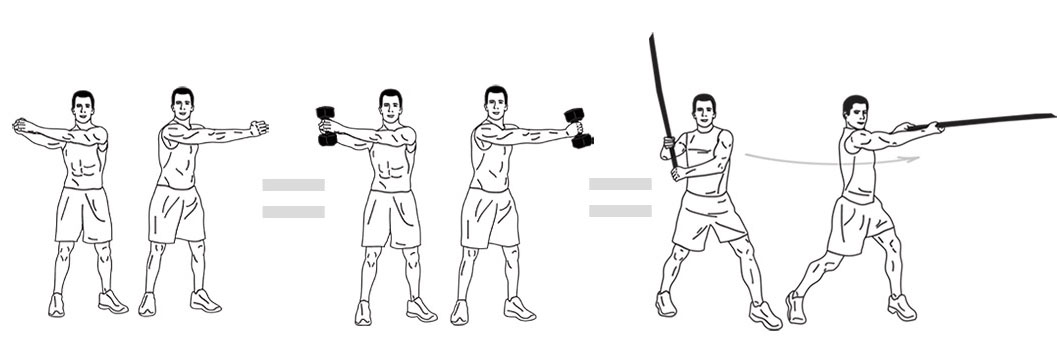
Add dumbbells to: squats, lunges, side lunges, punches, cross chops, arm raises, sitting twists and get-ups.
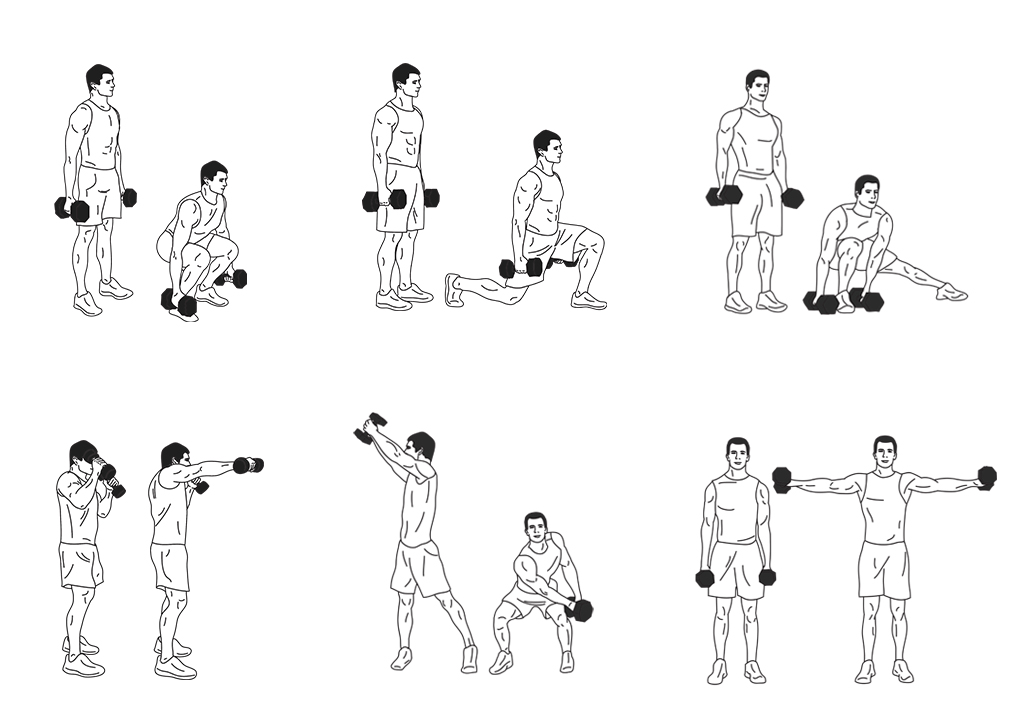
Dumbbells hack: instead of dumbbells you can use two plastic bottles and fill them with water or sand.
Dumbbells are perhaps the one of few pieces of equipment that are worth buying - as long as you make sure you use them regularly. Place them in front of the TV, you can do 10-20 basic biceps curls while you are watching your favourite show. Never, ever put them away – otherwise you’ll create an out-of-sight, out-of-mind situation. Even if you have to trip over them every time you go to the kitchen, it’ll still be a constant reminder that they are there, if you need them and you need them right now.
Modify Chops:
Add sandbag to: squats, lunges and push-ups
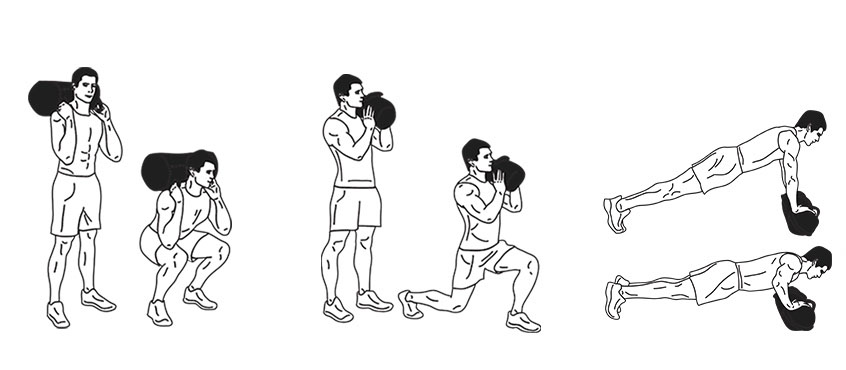
Any old gym bag can be turned into a sand bag and any laundry basket filled with books into a piece of lifting equipment – use your imagination.
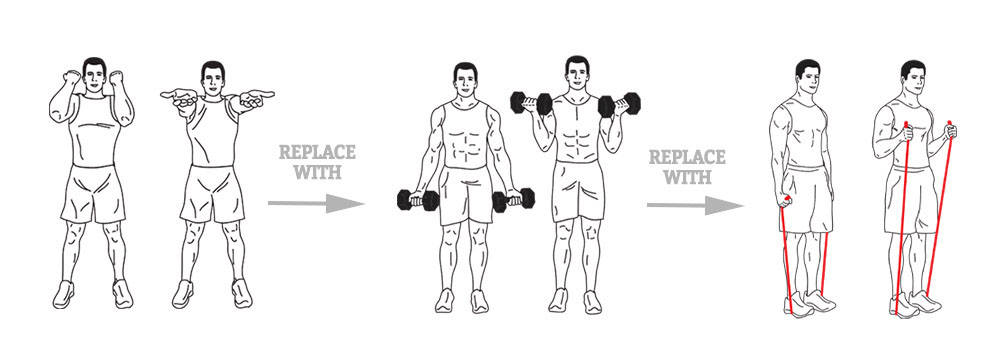
Replace bicep extensions with dumbbell curls or resistant band curls:
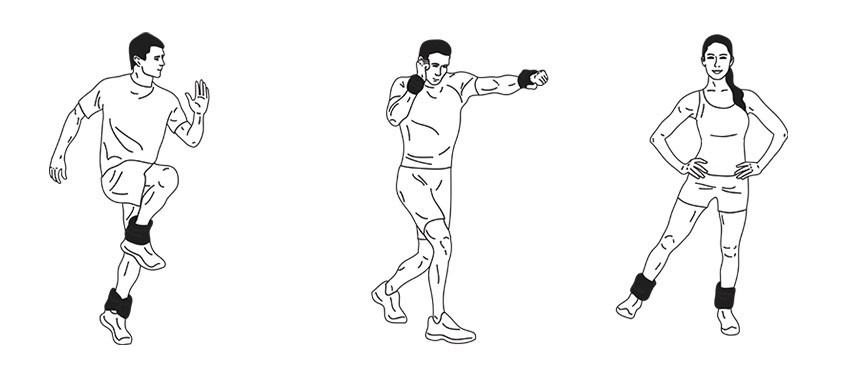
Add ankle and wrist weights for additional difficulty
Ankle weights are best for: flutter kicks, side leg raises, slow climbers, leg raises, kicks
Wrist weights are best for: punching, raised arm circles, punches and overhead punches