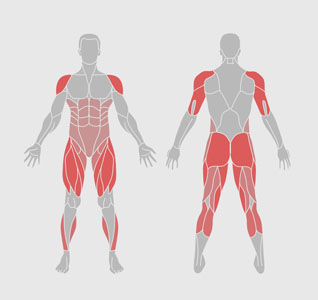
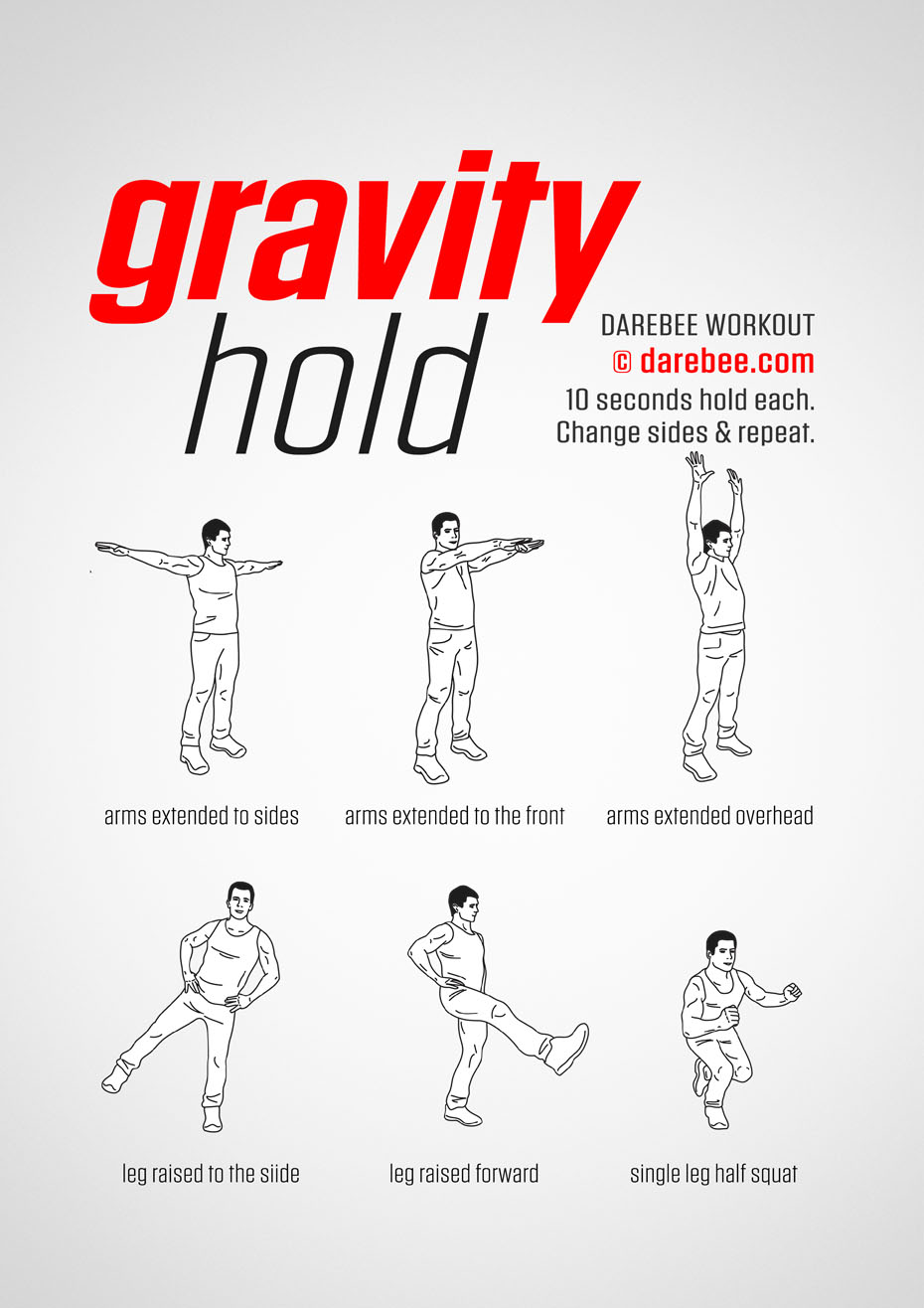


Gravity Hold is a standing isometric and mobility sequence working through six poses held for a count of 10 per side before the sequence repeats on the other side. The poses progress from bilateral upper-body holds - arms extended wide in a T position, then crossed in a self-hug, then reached overhead - into single-leg standing positions that combine balance with active hip flexor and hamstring loading. Each pose is distinct in what it asks of the body, and the cumulative effect across both sides is a session that addresses shoulder mobility, thoracic posture, hip flexor strength, and proprioceptive stability in a single continuous sequence.
The T-position hold works the posterior deltoids, rhomboids, and mid-trapezius against gravity - muscles that counteract the forward rounding that prolonged sitting creates. The crossed-arm hold stretches the posterior shoulder capsule and the muscles between the shoulder blades, providing a contrast that takes the shoulder through opposing end ranges across consecutive poses. The overhead reach demands scapular upward rotation and thoracic extension, opening the anterior chest and testing shoulder mobility under load. The single-leg positions that follow shift the entire challenge to balance and hip stability: a standing leg kick hold requires the hip flexor to work isometrically against gravity while the standing leg stabilizes, a higher kick hold increases both the hip flexor demand and the hamstring stretch of the raised leg, and the final walking lunge-like hold grounds the sequence with a deep hip flexor stretch and a return to bilateral contact.
Hold each position with active muscle engagement rather than passive hanging. The holds should feel like work.
To make it easier: Reduce each hold to a count of 5 and allow a light fingertip touch on a wall during the single-leg positions. Keep the raised leg lower than shown if hip flexor strength or balance is a limiting factor.
To make it harder: Extend each hold to a count of 20. On the single-leg positions, close your eyes after establishing the pose to remove visual compensation and challenge the proprioceptive system fully.