When it comes to developing functional strength, power, coordination and aerobic capability almost nothing beats running. So, what happens when it’s taken out of the equation? If for whatever reason we can’t run there are still things we can do to get the same benefits as running. Now however we will need to devote a little more time and do a lot more exercise.
Before we even begin we need to break down the benefits we get from running so that we understand what it is we are aiming for when we substitute other forms of exercise.
Running is great at helping:
- Build endurance
- Streamline the body
- Help develop power through muscle synchronization
- Build great leg strength
- Develop aerobic capacity
- Provide a solid foundation to build fitness on
Because running offers so many benefits replacing them with other exercises will have to take a more realistic, long-term approach so we don’t end up losing half the day, each time, training.
So, let’s start from the bottom up.
Leg Strengthening Without Running
To get the same benefits on leg strength we get from running we have to use quite a few different exercises.
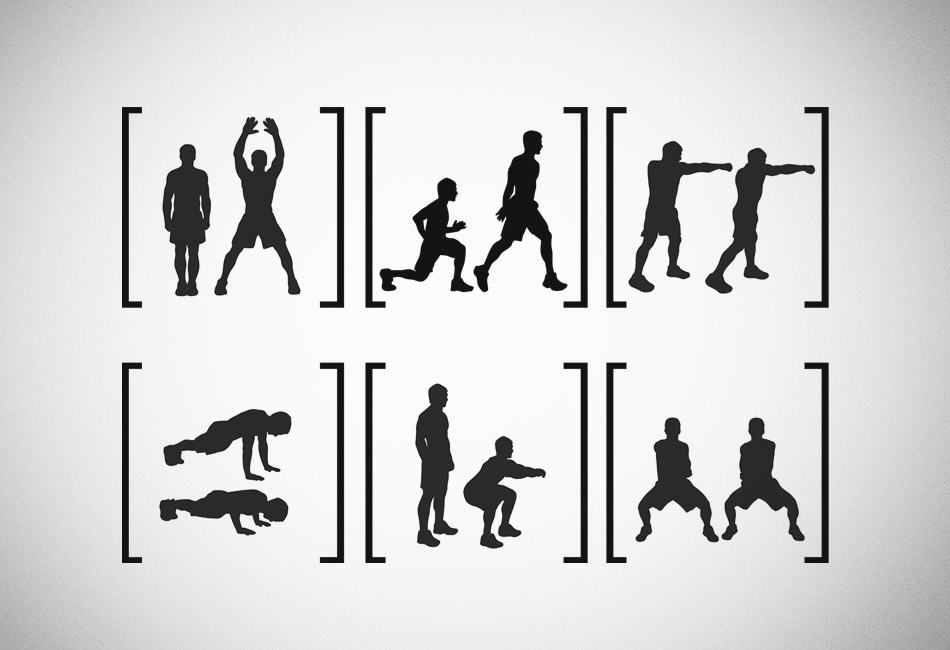
- Bouncing on the spot (or skipping rope) is a great way to condition the calves and begin to raise our body temperature. If we perform these for 15- 20 minutes and we soon begin to feel the benefits.
- Jumping lunges are useful for loading the lungs by making huge oxygen demands of the body plus they help develop quads strength. These are pretty intensive so it’s best to do them in bunches of ten or 20 at a time and repeat.
- Jumping Jacks are an easy way to get arm/leg coordination and work calves and shoulders. If we do these for 15 – 20 minutes we soon begin to work up a good sweat.
- Squats are a great way to develop quads strength and provided they are done in large sets of numbers they begin to deliver both strength and endurance. We should best try them in lots of 50 and build up in bunches so if we do over 50 it has to be 100 and if we do over 100 it has to be 150 and so on.
- Kicks of any sort are great at helping the leg muscles streamline, build good coordination and balance with the rest of the body and start building fast twitch action fiber we can use for sprints. These are best to try them in sets of 50 – 100 at a time for maximum benefits.

Working the Upper Body
Paradoxically running is all about the arms. If our hands were tied behind our back we’d find it very difficult to run any distance at all. To work our arms and shoulders the same way we would in a 5km run, for example, we need to incorporate several different sets of exercises in our regime.
- Push-ups and their many variations help with developing good upper body strength. We are best going for sets of between 20 – 40 at a time and doing at least two to three sets in each session.
- Lunge punches develop the upper body/lower body coordination necessary for strength, balance and explosiveness. Best at 50 – 100 of them each time we use them.
- Speed bag punches create a constant movement that makes a steady demand on shoulder and lung endurance without over-tiring us. We should do them for 15-20 minutes at a time so we can begin to feel like we’ve run some distance.
- Straight punches are a good way to begin to work aerobically. We should do them fast and furiously with fast retraction of the arm each time we punch so that they give our lungs a really good workout each time.
Add a Strong Aerobics Element
Provided we have picked at least three exercises from each of the above sections we have, by now, got a workout that works our circulatory system and also helps us develop good arm/leg coordination as well as individual arm and leg strength.
What we now need to focus on is a little aerobic load to help work our lungs. Here are a few really good options:
- Squat Hold Punches are the perfect upper body and aerobic exercise. Because our knees are bent they help us with leg strength and even work the lateral abs during the punching phase. The punching itself, when performed for 15 – 20 minutes begins to raise our body temperature, work our lungs in a steady way and also work our arms. We can go for an even pace here where we stay on the same. Steady speed throughout for an even load or we can explode in 20 – 60 second bursts of energy where we up the tempo of our punching significantly for that length of time before taking it back down a notch to our usual tempo. This has the effect of loading our lungs and really forcing us to work aerobically, particularly as we take it down and have to make up for the oxygen deficit our burst of speed generated.
- Overhead punches are also an excellent aerobic exercise if we execute them fast, with full arm retraction each time and for anywhere between 10 – 20 minutes.
- Side kicks executed in a fast, side-to-side technique also do an excellent job of loading the aerobic system. Performed for anything between 5 – 10 minute sets they load the lungs, pretty quickly.
So, provided we are willing to do a little extra work and put in a little more dedication we can get away without any running and still enjoy the benefits that running provides. The Cardio Blast program also works on a similar principle.