Vegetarian and vegan protein covers every training goal at full value - the controlled trial settled it: young men matched on total protein intake, one group fully plant-based and one omnivorous, gained the same muscle size and strength across twelve weeks of resistance training[1] - with one practical catch worth planning around: plant proteins run less concentrated per bite, so hitting the target takes slightly more intention. The target itself is unchanged by diet: about 1.6 g per kilogram (0.7 g per pound) of bodyweight daily for muscle-building goals, the intake beyond which the pooled trial evidence found no further benefit,[2] spread across the day's meals. What follows is the ranked shopping list that makes the arithmetic easy - with the recipe side living at DAREBEETS, the plant-based kitchen built for exactly this.
The Champions, Ranked By Density
- Seitan - the density champion: around 25 g of protein per 100 g, wheat gluten in savory form, the closest plant food to meat's concentration. (The one to skip for celiac and gluten-sensitive eaters - everything below covers you.)
- Tempeh: roughly 19 g per 100 g - fermented whole soybeans, firm, nutty, and carrying its fiber along.
- Tofu, firm and extra-firm: about 10-17 g per 100 g depending on firmness - the flavor chameleon; press it, and it absorbs whatever the pan is doing.
- Lentils: about 18 g per cooked cup, with the fiber guide's favorite bonus riding along - and no soaking required, cooked from dry in 20 minutes.
- Beans and chickpeas: roughly 15 g per cooked cup, the budget guide's twin engine of protein and fiber at unbeatable prices, canned counting fully.
- Edamame: about 17 g per cooked cup - whole soybeans, freezer-to-bowl in five minutes, the highest-protein snack in the store.
- Soy milk: around 7 g per cup - the one plant milk that keeps up with dairy on protein; most others run 1-2 g and are flavored water for this purpose.
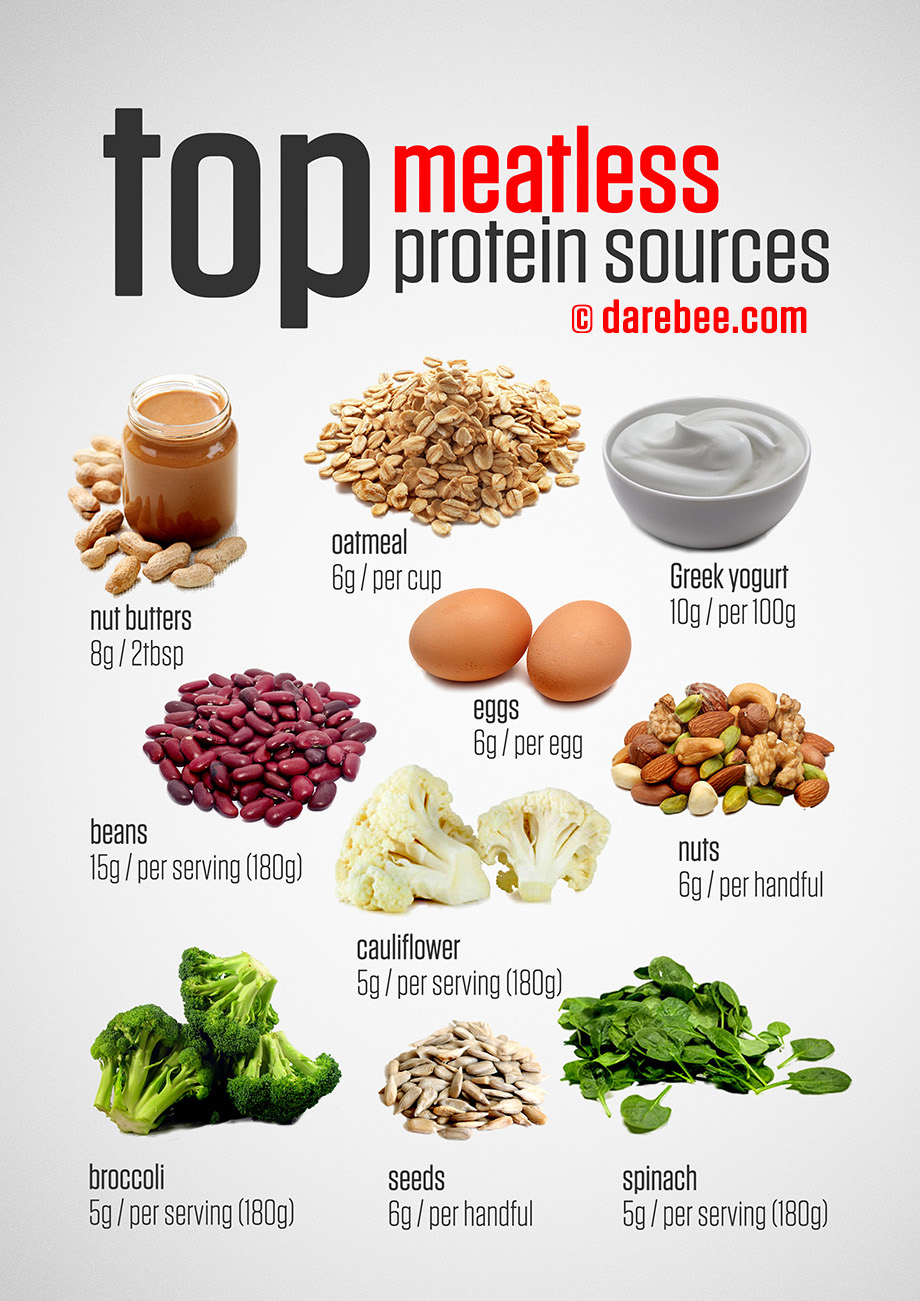
- Nuts, seeds and their butters: 5-8 g per handful or two-spoon serving, with hemp seeds (about 10 g per 3 tablespoons) and peanut butter leading - calorie-dense, so they top up totals rather than anchor them.
- Whole grains as quiet contributors: quinoa (8 g per cooked cup), oats, whole-grain bread and pasta - modest per serving, meaningful per day, since they show up at most meals anyway.
- For vegetarians (not vegans): eggs and dairy - eggs, Greek yogurt (15-20 g per cup) and cottage cheese remain among the cheapest, densest options anywhere, per the budget champions list.
Making The Arithmetic Automatic
The pattern that hits the target without counting: a protein anchor at every meal - legumes, tofu, tempeh, seitan, edamame, eggs or dairy where they apply - plus soy milk where milk goes, plus nuts and seeds as toppers. A 70 kg (154 lb) trainee needs about 112 g daily at the muscle-building target; a day of oats with soy milk and hemp seeds, a lentil-and-grain lunch, edamame or yogurt as the snack, and a tofu or tempeh dinner clears it with no single meal doing heroics. Two upgrades close the gaps that matter: variety across the week covers the amino-acid spread without any within-meal "combining" gymnastics (the old rule retired decades ago - the day's mix is what counts), and B12 comes from fortified foods or a supplement on fully plant-based diets, non-negotiable, decided once. Soy, for the readers still carrying the worry: the human evidence supports it as a safe, effective protein staple for everyone, training goals included.
Common Mistakes
- Assuming plant protein cannot build muscle. The matched-protein trial found identical gains. Quantity decides; origin does not.
- Hitting the target by accident - which is to say, missing it. Plant proteins run diluted; without an anchor per meal, days quietly land 30-40 g short. The pattern above exists for this.
- Buying almond milk for protein. 1-2 g per cup. Soy is the one that keeps up.
- Protein-combining anxiety. Retired science. Weekly variety covers the spread; no meal needs to be a puzzle.
- Supplements before staples. A protein powder is a convenience, not a requirement - lentils out-price it, and the champions cover the target whole. Add powder for logistics, never from fear.
What To Expect
Expect the first two weeks to involve actual arithmetic - reading labels, weighing the tofu once - and expect it to automate fast: the anchor-per-meal pattern becomes invisible within a month, exactly like every other tracked habit. Training results will follow training quality, indifferent to the diet, as the trial promised - provided the totals land. Digestion renegotiates as legumes climb (ramp gradually; the microbiome adjusts within weeks). And the grocery math tends to please: the top of the density list overlaps almost perfectly with the budget guide's cheap champions, which makes the plant-protein aisle one of the few places where the high-performance option and the cheap option are the same shelf.
The Goal: An Anchor At Every Meal, The Same Old Target
Plant protein serves every training goal at the unchanged 1.6 g/kg target - matched protein produced matched muscle in the controlled trial - built from the density rankings: seitan, tempeh and tofu at the top, legumes as the everyday engine, edamame and soy milk as the easy upgrades, nuts and grains topping up, eggs and dairy where vegetarianism allows. Anchor every meal, vary the week, supplement B12 on fully plant-based diets, and let DAREBEETS turn the list into dinners.
Summary
Vegetarian and vegan protein builds muscle at full value - protein-matched vegan and omnivorous lifters gained identical size and strength over twelve controlled weeks - at the unchanged target of ~1.6 g/kg (0.7 g/lb) daily, beyond which pooled trials found no further benefit; the only catch is concentration, solved by ranking: seitan (~25 g/100 g), tempeh (~19), firm tofu (10-17), lentils (~18/cup), beans and chickpeas (~15/cup), edamame (~17/cup), soy milk (~7/cup - the one plant milk that keeps up), nuts and seeds as toppers, grains as quiet contributors, plus eggs and dairy for vegetarians. Run an anchor at every meal and the arithmetic automates; weekly variety covers amino acids (meal-combining is retired science); B12 is the one non-negotiable supplement on fully plant-based diets; soy is safe and effective by the human evidence. The density champions double as the budget champions - the recipes live at DAREBEETS.
Research
- 1. Hevia-Larraín V, Gualano B, Longobardi I, Gil S, Fernandes AL, Costa LAR, Pereira RMR, Artioli GG, Phillips SM, Roschel H. High-Protein Plant-Based Diet Versus a Protein-Matched Omnivorous Diet to Support Resistance Training Adaptations: A Comparison Between Habitual Vegans and Omnivores. Sports Med. 2021 Jun;51(6):1317-1330. doi: 10.1007/s40279-021-01434-9.
- 2. Morton RW, Murphy KT, McKellar SR, Schoenfeld BJ, Henselmans M, Helms E, et al. A systematic review, meta-analysis and meta-regression of the effect of protein supplementation on resistance training-induced gains in muscle mass and strength in healthy adults. Br J Sports Med. 2018 Mar;52(6):376-384. doi: 10.1136/bjsports-2017-097608.