
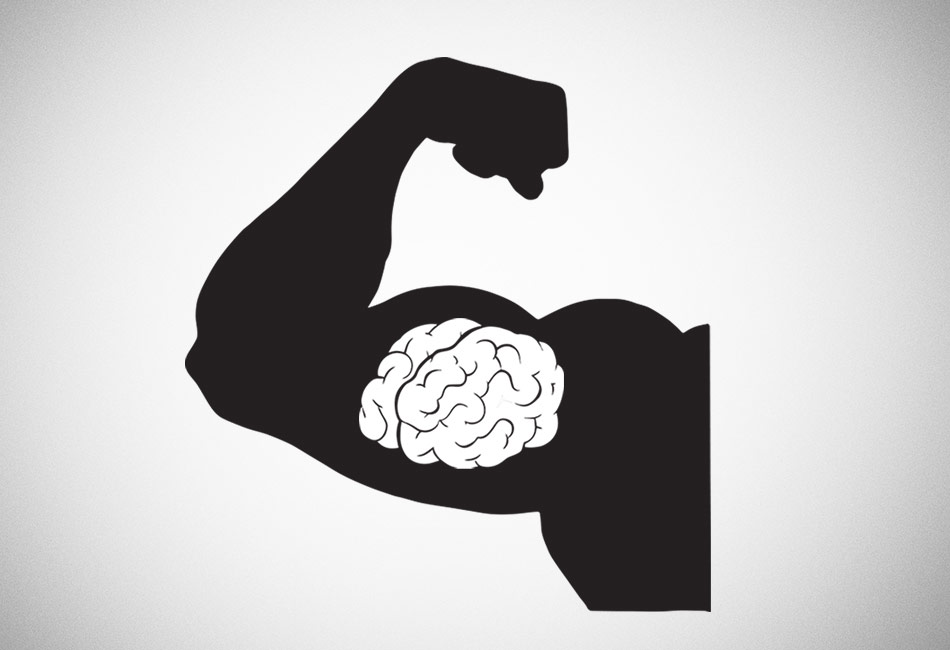
Fitness is the outcome of many different factors that work together to achieve it. Nothing quite shows that complexity more clearly than “muscle memory”.
Because the term “muscle memory” is used in two different types of context it is worth looking at each one in turn to better understand what is going on and what it is we are actually describing. In the first instance it implies that muscles have a kind of memory when it comes to fitness and can snap back into it after people have let themselves go a little or if they have lost their level of fitness from a layoff due to injury. In the second it is used to suggest that muscles have some kind of on-board memory regarding the way they move, for example when you learn to throw a ball or duck a punch or, even, learn to ride a bicycle which allows them to perform it again at a much later date even if we have not been practicing the move for a while.
How right are they? Until recently all we had to go by was some anecdotal information on the first context and some poorly understood studies from the 70s regarding the second. Those who were heavily involved in fitness felt that intuitively they were right in both cases but they had no real theory to support their personal experience and those who were studying human physiology and muscle growth were looking, as it turned out, at the wrong things which led them to create the wrong theory.
Let’s unpack all this a little by looking at each of them separately and then both together so we can see where the overlaps occur and how we can best benefit from the current state of understanding of how muscle memory works.
Muscles Have Memory of their Fitness
The idea that muscles have some kind of memory arose from anecdotal reports that trained athletes who had come back from a long lay-off due to injury or a break from training and were therefore starting again from a detrained level, got fitter faster than those who did not have the same fitness background as they did.
Everyone who, for some reason, is forced to stop training knows how quickly the body reacts to the layoff. There is very fast reduction in muscle mass and endurance drops off dramatically, very quickly. From an evolutionary point of view this makes sense. Muscle is metabolically expensive as it requires large amounts of energy to maintain. The moment the body feels it doesn’t need it any more it begins the reduction process which allows it to conserve energy.
As recently as 2016 a study carried out by Malene Lindholm, a molecular exercise physiologist at the Karolinska Institute in Stockholm showed that muscle tissue does not have a "memory" of past exercise training. In that study the researchers asked 23 very sedentary people to come into the lab and kick one leg 60 times a minute for 45 minutes. The participants repeated this exercise four times a week over three months. They then took nine months off and returned to repeat the training but this time with both legs.
The research team then took muscle biopsies both before and after both exercise training periods, and analyzed which genes were active in the muscle tissue in each leg. Their findings showed that both trained an untrained muscle tissue exhibited the exact same physiological changes.
When muscle is trained the very first change that happens to it is an increase in the number of nuclei. Nuclei are responsible for the production of protein that is required for the growth and repair of the muscle itself. Proteins, alongside other chemical messengers produced by each nucleus in a muscle cell are necessary for the healthy function of muscle tissue when it is exercising. The more nuclei a muscle has the better it can respond to the rigor of exercise and the stronger and more durable it is. There is also the suggestion that the number of nuclei, multiplying, play an eventual role in the increase of the muscle size itself.
When the Karolinska Institute 2016 research study took place it looked at exactly the same changes sustained by detrained muscle tissue as every other study before it had:
- Connective tissue size
- Muscle fiber size
- Gene expression during exercise
- Strength output of trained and untrained leg
The findings were that despite the fact that one leg had been through a three-month long training program earlier, there were no major differences in its gene expression and output from the untrained leg. The researchers, in their paper, mentioned that there were some indications of some small differences but nothing conclusive enough to change their opinion that muscles do not have a muscle memory.
As it happens, by looking at performance during exercise and biopsying the muscles the researchers were focusing on the wrong part of the mechanism governing muscle memory. Detrained and untrained muscles do not, indeed, exhibit differences in gene expression during exercise as they build up their muscle strength. But that doesn’t mean that changes have not taken place at a much deeper, and therefore harder to spot level.
Just two years after the Karolinska Institute study researchers at Keele University carried out a much deeper, follow-up that looked specifically for changes of detrained and untrained muscles, during exercise, at a cellular level.
“The study examined eight untrained male subjects over a 22-week period. Each subject participated in a period of targeted resistance exercise, followed by a period of inactivity, and then another stretch of exercise. Muscle biopsies were taken at several points across the study and over 850,000 genomic sites were analyzed for epigenetic alterations.”
What it revealed was what every athlete and sports coach has anecdotally known for a long time now: Muscles that have been trained before, find it easier to get back to a trained state than untrained muscles building up for the first time. The reason for this lies in epigenetic changes that happen at the level of each individual cell. Specific sites on each cell are responsible for muscle growth and an increase in strength. When muscles stop training there is a slow at first and then faster decline of muscle size and strength but the genes responsible for muscle growth do not go away.
This means that muscles that were once strong can quickly ramp up production in proteins necessary for muscle building. There are three things to take away from this and one small but important detail the study did not stress enough.
The takeaways first:
AMuscles do have a memory of their former fitness and strength encoded in their genes and it allows them to rebuild that strength faster when they lose it.
BSustained exercise creates epigenetic changes at a cellular level that essentially allow us to modify our DNA (within specific parameters).
CExercise, over time, builds a new version of us that remains even after we stop exercising. We are, essentially, the architects of our physical self.
The detail that was not stressed enough is that although retraining muscle is easier if we have trained before, as we age, the ability of muscle to remember its strength-building capabilities wanes. Which means it is probably better to sustain our exercise regime than to rely on past glories and let ourselves go thinking we can pick up where we left off at any time.
There is More than One Kind of Muscle Memory
This leads us to the second kind of “memory” associated with muscles, which is their ability to remember specific, complex motor patterns. Riding a bicycle is probably the easiest example here because it shows the exact extent of this ability as well as its limitations.
Get on a bike after a really long layoff and although you will not need to relearn the skill you will find that you have somehow grown “rusty”. You’re a little wobbly in some of the movements and find you have to really concentrate on some others.
Martial artists, boxers, dancers and gymnasts know well that this type of muscle memory begins in the brain and extends to the body via its central nervous system and the complex neural connections formed in the brain.
This kind of muscle memory is not a true memory of the muscle but a memory in the brain of a certain muscle movement that is controlled via a network of neurons. What happens when we learn and then repeat a particular movement is that the connections that govern it strengthen over time so that signals get through fast with less hesitation.
To explain this in more detail, consider that this type of muscle memory is stored in the Perkinje cells of the cerebellum, where the brain encodes information and records whether certain movements are right or wrong. The brain then gradually focuses more energy on the correct action and stores it in your long-term memory. Once it’s been stored then we need to use less of the brain to repeat it. Which is when the movement starts to feel natural.
Faster reflexes, complex motor skills and the ability to move our body in three-dimensional space with speed, accuracy and precision are all part of this mechanism that goes on all the time. It is how we learn to walk in the first instance, it helps us refine our running technique and it requires patience and perseverance when it comes to learning complex dance or athletic movements.
There are two things to take away from this one and they are both important: First, everything we do, from catching a ball to reaching out with one hand, while driving to turn on the AC in the car activate sensors called proprioceptors in our muscles, tendons, and joints that feed back to our central nervous system. The body then learns to interpret all that data feeding it back to the brain in relation to how successful we have been. A set of dance movements or a complex series of martial arts steps that result in the outcome we want are sent to the brain to encode and remember. If they don’t however, if we trip over our own feet while dancing or forget which way to kick or punch in a martial arts choreography the information is discarded. The brain never even gets to encode what was wrong.
This is why repetition at something gets us closer to getting good at it. Each time we are successful our brain receives signals it encodes so we can remember them as “muscle memory” and each time fail it doesn’t so that data is simply lost.
The good news in all this is that once our brain has formed specific neural networks to govern a movement and encoded all the associated memories around it we can still carry it out even if we don’t practice it for a long time. But again, there will be a little ‘rustiness’ in our capability as the neural connections in our brain that govern it will have become weakened with disuse.
The Practical Takeaways
There are several practical takeaways here that directly affect fitness, motivation and health and both types of muscle memory are key to them.
For cellular muscle memory:
- Sustained training over a minimum three-month period is necessary for changes at a cellular level to take place. That is also the minimum length of time for those who train three times a week to begin to feel first and then see some change in their performance and musculature.
- The younger we start to train the better it is for the type of cellular muscle memory we develop.
- Trained muscles that have been detrained respond faster to training.
- A variety of training programs that constantly challenge the muscles deliver faster cellular adaptations. So adding variation to our training routine while keeping the challenge to the muscles high delivers faster results.
For neural muscle memory:
- Repetition of complex moves are essential for enhanced neural and motor skill development.
- Dance and combat moves deliver some of the best neural adaptations.
- The development of complex neural muscle memory helps improve cognitive functions.
- Neural muscle memory, once formed, requires reinforcement to keep the strength of the connections up so practice is important.
Both types of muscle memory are now better understood and they form a picture where the mind and the body are closely intertwined, one feeding into the other and both changing from the connection.
Sources
The Role of Learning in Coordination and Strength Training
Muscle Memory Exists at DNA Level
Human Skeletal Muscle Possesses an Epigenetic Memory of Hypertrophy
Strength and skeletal muscle adaptations in heavy-resistance-trained women after detraining and retraining
The Impact of Endurance Training on Human Skeletal Muscle Memory, Global Isoform Expression and Novel Transcripts
Number and spatial distribution of nuclei in the muscle fibres of normal mice studied in vivo