
Sleep is nature’s Borg Regeneration Pod. While many of our systems power down while we sleep many others power up so we barely save any energy at all between our sleeping and waking stage.
While we are asleep our brains kick into high gear, doing a lot of housekeeping and repair in our mental connections. This is activity that improves the function of our brains when we wake up so we can remember things better, have more efficient ways to pull up memories, learn faster and respond quicker to unexpected emergencies.
Similarly, when we are asleep our muscles also begin to undergo changes in their activity. Voluntary control and muscle function are largely disabled and involuntary movements take over. Muscle building and repair goes on during the sleep stage and the body uses the downtime to focus on cellular repair and the streamlining of its inner processes. This is when muscle soreness from intense exercise stops or gets better and muscles get stronger and bigger.
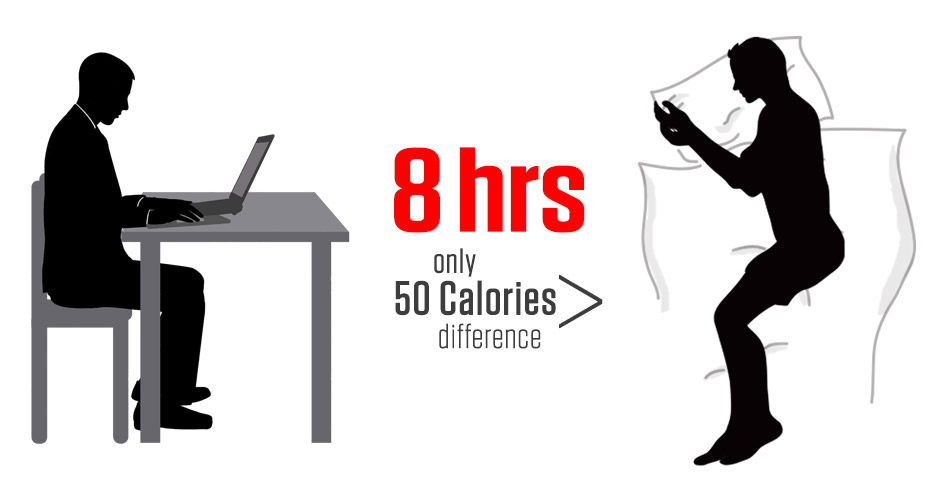
As a matter of fact the activity that goes on when we are asleep is such that the difference in energy needs between our waking and sleeping states over a timespan of eight hours is barely 50kCal (about the number of calories contained in a single slice of toast).
The problem with sleep is that while we do need it the transition phase from being awake to being asleep is hard for everybody. When we are awake our brains are active. Transitioning them to a different kind of activity represented by sleep is not easy. It is even harder sometimes to switch off our bodies. Muscles that are used to training want to remain active and alert, quietening our bodies long enough for our minds to ‘sleep’ requires some effort and frequently that effort only serves to keep us awake longer as we struggle to make ourselves sleep.
Three Ways to Drift off to Sleep
Just like you prepare for exercise by putting on your favorite exercise clothes and tying on your sports shoes, so does a physical routine, prior to sleep help prime the body for drifting off. This begins to tell the brain that it really needs to shut down some of its functions.
The brain, just like the body, can be trained to sleep and there are ways we can teach it how to drift off to sleep easier.
1. The Mantra effect: A repetitive set of words, thought over and over again, force the brain to get bored and begin to shut down its conscious state because “nothing of interest is happening now”. This is partially the basis for some meditation techniques. An easy one to remember are the four words: “Sleep Deep, Deep Sleep” which have a hypnotic quality when mentioned inside the head again and again. You can make up your own of course as long as they are short words, have a monotonous rhythm to them and are easy to remember.
2. ‘Counting Sheep’: This is an old wives’ tale that if you count sheep in your mind, lying in bed, you will soon fall asleep. Basically the trick is to use numbers either counting slowly from one to 100 or counting backwards from 100 to one. Numbers have a progression and are hardly an activity from the brain’s point of view so slowly counting up or down can help us drift off to sleep.
3. Visualization: This is probably the most effective technique when you have a restless body as well as a restless mind. You know how hard it is to fall asleep as just as you’re about to drift off you change sides or your body twitches and you’re wide awake again. Visualization actively relaxes both your body and mind. The way it works is that you picture an ideal location that is completely relaxing. It might be an isolated beach, in summer, on a very hot day with you relaxing in a sun lounger. Or it may just be a completely darkened room you are seeing in your head with you floating in ever thickening darkness. The lack of stimuli relaxes the body and helps the mind power down.
Muscles Grow While You Sleep
While asleep, parts of our body such as perspiration (breathing) and blood pressure, slow down. Others however, like the endocrinal system kick into high gear and functions such as growth hormone, thyroid hormone, and melatonin secretion come into play. This is why young adults and children need adequate amounts of sleep to grow, while adults require it to get fitter and stronger when training.
This doesn’t mean however that while sleep is good for you, oversleeping is better. During sleep serotonin production in the body drops significantly. Serotonin is required to regulate activity across neural pathways and, during sleep, its absence paralyzes the large muscle groups of the body. This results in loss of muscle tone, the mechanical stress that allows the muscles to help maintain our posture. Deep relaxation of the large muscle groups allows rapid repairs to be carried out to torn muscle fibers but sleep too long and the muscle fibers themselves will begin to lose strength. So it is always best to work out the optimal length of time you need to sleep and stick to it most nights than work on a deficit thinking that at some point you will “catch up”.
This beings up the question of what happens when you can't? Life, deadlines, projects, work can all conspire to shorten the time available for sleep. First, let's establish that not everyone needs eight hours sleep a night. While we are traditionally built to sleep this way, the number of hours we sleep will vary due to:
- Stress
- Fatigue
- Sleeping habits
- Lifestyle
The body can adapt, to some extent, for that too. If you train really hard and your body needs the recuperative time of sleep but does not get enough, it will shorten some very specific stages of sleep and go directly to the deep sleep phase where it recuperates fastest. So, it adapts around our lifestyle, with some obvious limits. If you find yourself consistently feeling short of sleep and making the kind of mistakes that indicate your brain and body are struggling to keep up maintenance routines, you obviously need to find the time to get some decent sleep.
Balance in your sleep and waking hours is key to maintaining not just a healthy body but also a healthy mind.