
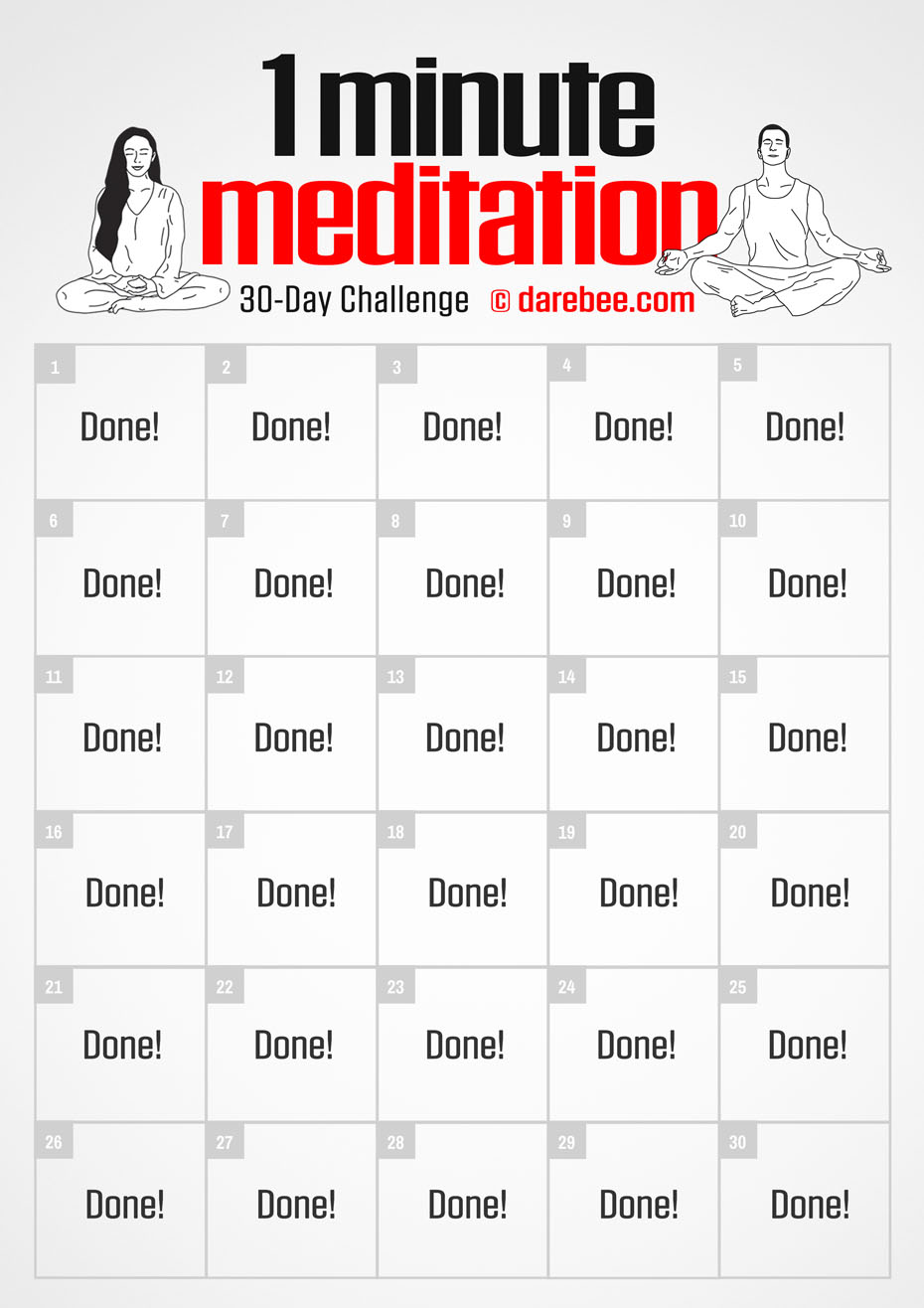
Tap a day on the poster to check it off — your progress is saved on this device.


This is a self-care challenge with one rule: sit still and breathe slowly for one minute a day, every day for 30 days. It uses a fixed breathing pattern so there is nothing to work out - you follow the count and the minute takes care of itself. It needs somewhere to sit, which can be a chair, a car seat, a bed or a train. The cross-legged figures on the poster are a suggestion, not a requirement, and nothing here needs the floor. The difficulty rating is 1 because the task is a minute of breathing. The only thing you can get wrong is not doing it.
The calendar is 30 identical days because the practice never changes. What changes is how easy it is to sit still for it. On day 1 a minute of doing nothing feels long and your mind will wander off a dozen times. By the second week the minute is comfortable and the breathing pattern is automatic. By the end most people find they reach for the same slow breath at other points in the day without planning to, which is the practice starting to travel.
How to do the challenge
Find a quiet spot, sit comfortably with your back supported or upright and close your eyes. Breathe in through your nose for a count of 4, hold for a count of 7 and breathe out slowly through your mouth for a count of 8. That is one cycle and it takes 19 seconds, so a minute is about three breaths. Use the timer above - it counts the pattern for you and can talk you through it if you turn the volume up. When your attention drifts, notice and bring it back to the count. Drifting is normal and noticing it is the practice.
Tie the minute to something you already do every day so it does not depend on remembering. Before your first coffee, after you close your laptop, or in bed before sleep are all reliable anchors. If the 7-second hold makes you lightheaded, shorten it to 4 and lengthen it as the weeks go on. The slow exhale is the part that matters most.
Why it works
Slow breathing with a long exhale is the most reliable way to calm your nervous system on demand. Lengthening the out-breath slows your heart rate and shifts your body out of its alert state, which is why this pattern is used for stress, for falling asleep and for the minutes before something frightening. Breathing Techniques For Anxiety covers the mechanism and a few other patterns. The other half of the effect is attention. A minute of watching your breath is a minute of not doing anything else, and 30 of those in a row teach you that you can stop when you decide to.
A minute a day is a start, not a meditation practice, and it is honest to say so. The benefits people describe from meditation - better focus, less reactivity, sleeping more easily - come from longer sessions kept up over months, and the Guide to Meditation is where to go when the minute feels too short. It is also not a treatment for anxiety. If anxiety is a serious problem for you, this can sit alongside proper help and it is no replacement for it. For everyone else, a calmer minute a day is a fair return for a minute a day.
Adjust Difficulty
Make it easier: Use the timer with the voice on so you never have to count. Shorten the hold to 4 seconds or drop it entirely and breathe in for 4 and out for 8. Keep your eyes open and rest them on a fixed point if closing them makes you restless. Do it lying down. If you forget, do it when you remember, tick the day and carry on.
Make it harder: Make it two minutes, then three. Do the minute twice a day, once in the morning and once before bed. Keep your attention on the breath without the timer's voice and count the cycles yourself. Add the minute at the end of every workout as a cool-down, which is where a slow breath does the most work. Sit through the minute without moving at all, which is harder than it sounds.
What to expect
The first few days feel slightly silly and much longer than a minute. Expect your mind to wander constantly and expect to feel a little lightheaded on the first couple of holds if you are not used to breathing this slowly - shorten the hold and it passes. By the end of the first week the pattern is familiar and the minute is comfortable. Somewhere in the second week you will notice that you feel noticeably calmer at the end of the minute than at the start, and that is the honest effect: a reliable reset that works within 60 seconds. Around week three you will catch yourself taking one long slow breath in a queue or before a difficult conversation without having decided to. Some people feel nothing much beyond that and that is fine. By day 30 you will have a tool that takes a minute and works, and most people keep it.